Guides/Design·8 min read·Updated September 4, 2026
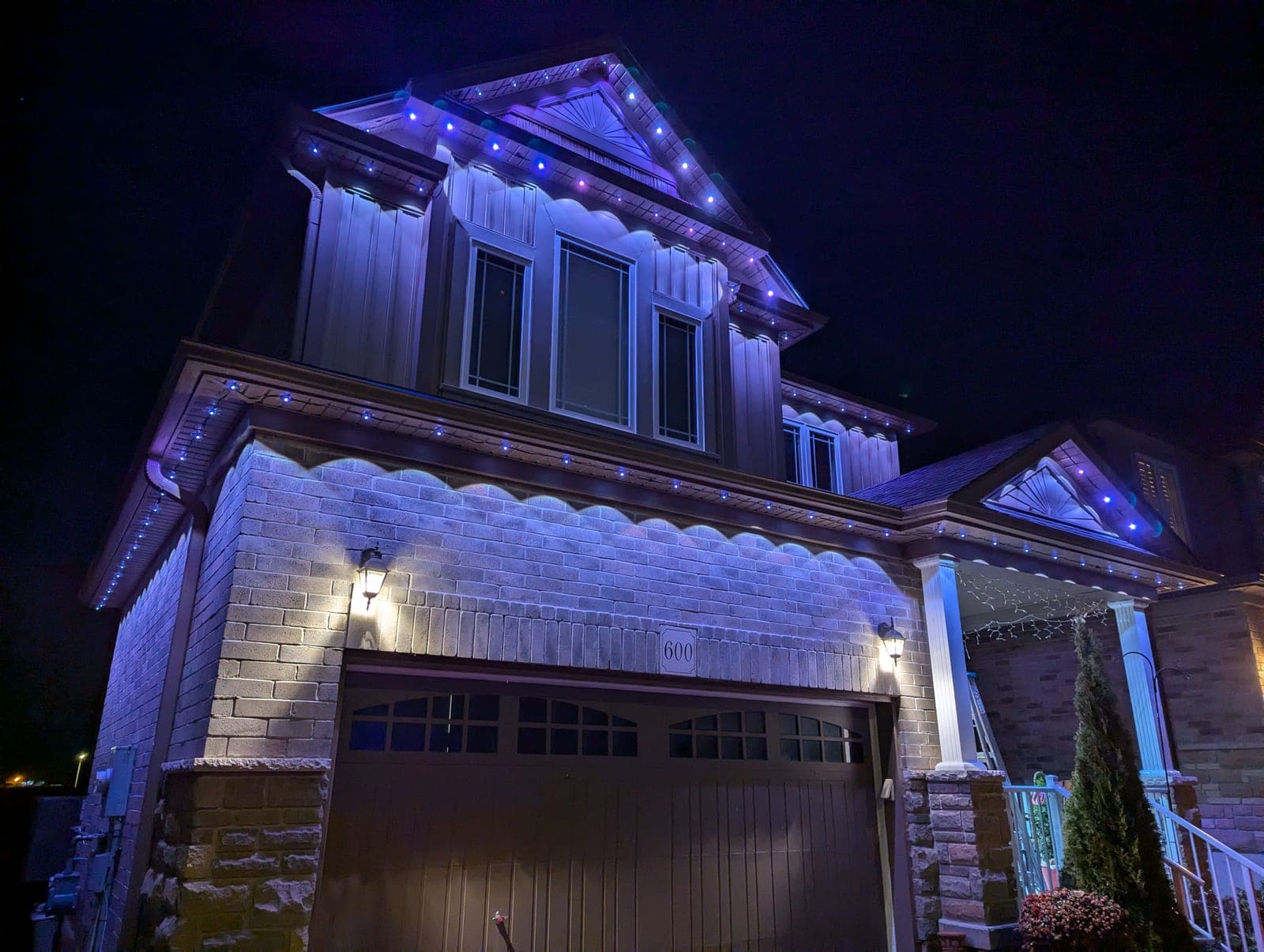
Warm white, multicolour and RGB all read differently on a rooftop, and the right choice depends on your home's exterior, your street and whether you want a fixed seasonal look or year-round colour control.
Key takeaways
- 1Warm white is the most versatile scheme and generally the safest choice against brick, stone and most siding colours, which is why it remains the most requested option.
- 2Multicolour reads as the most traditional festive look but needs a slightly busier home exterior to avoid looking cluttered on a plainer facade.
- 3RGB colour control is only available through a permanent lighting system, since classic seasonal C9 bulbs are a fixed colour once installed.
- 4The same home can mix warm white on the roofline with a different accent colour on garland or trees, rather than committing to one scheme for the whole property.
- 5A permanent RGBW system lets a homeowner change colours for different occasions year-round, while a seasonal install locks in one look for that year's holiday season.
Colour is the first decision most homeowners make about their holiday lighting, usually before bulb type, layout or anything else. Warm white, multicolour and RGB each create a genuinely different look on a roofline, and each suits a different kind of home, street and homeowner. There is no single right answer, but there is usually a right answer for a specific property once a few factors are considered: the colour of the home's exterior, the general look of the street, whether the household wants one fixed scheme for the season or the ability to change colours throughout the year, and simple personal taste. Here is how the three main approaches compare.
The three main colour approaches at a glance
Warm white uses a single, consistent glow in the 2700K to 3000K range, the same warm tone found in most incandescent household lighting. Multicolour mixes several fixed colours, typically red, green, blue and gold, along the same run. RGB, short for red-green-blue, refers to a controllable LED system that can display any colour and is only available through a permanent lighting setup rather than seasonal bulbs, since the colour is set electronically rather than baked into a fixed-colour bulb. Each approach has a distinct feel: warm white tends to look elegant and understated, multicolour reads as festive and traditional, and RGB offers the most flexibility because the colour is not locked in once installed.
Warm white: the classic and most versatile choice
Warm white is the most requested colour scheme for a reason. It complements almost every exterior colour, from red brick to grey stone to any shade of siding, and it photographs well in a way that busier colour combinations sometimes do not. Warm white also tends to look more upscale, which is part of why it has become the default choice on higher-end streets in Oakville, Ancaster and parts of Burlington. The main trade-off is that warm white alone can look a little plain on a home that would otherwise carry a bold, festive look well, particularly if neighbouring homes are running colourful displays. Many homeowners solve this by pairing a warm white roofline with a wreath, garland or tree wrap in a single accent colour, keeping most of the display warm white while adding just enough colour to feel festive rather than plain.
Multicolour: the traditional festive mix
A classic multicolour scheme, mixing red, green, blue and gold C9 bulbs along the roofline, is what many people picture first when they think of Christmas lights, and it remains a strong choice for homeowners who want their house to clearly read as a holiday display from a distance. Multicolour tends to suit homes with a busier or more traditional exterior, larger properties where a bolder look does not overwhelm the facade, and streets where several neighbours are already running colourful displays. The trade-off runs the other way from warm white: multicolour can look cluttered on a smaller or more modern home, and it does not photograph quite as cleanly in daylight when the bulbs are off. It also commits the whole display to one look for the season, since classic bulbs are a fixed colour once installed.
RGB and permanent colour control: the flexible option
RGB control is not a colour scheme so much as a different category of lighting altogether. It is only available through a permanent lighting system, which uses RGBW LEDs built into a discreet channel along the roofline and controlled from an app rather than a fixed-colour bulb. This means the same roofline can display warm white for most of the year, switch to red and green for December, shift to orange for Halloween, or run a school's colours for a graduation, all without anyone climbing a ladder or swapping a single bulb. For homeowners who like the idea of a seasonal display but do not want to commit to one colour scheme every year, or who want lighting that earns its keep well beyond the holidays, RGB through a permanent system is worth comparing against a classic seasonal install. Details on how that system works are at /services/permanent-lighting.
Matching your colour scheme to your home's exterior
The colour of the brick, stone or siding on a home has more influence on which scheme looks best than most homeowners expect. Warm white generally reads well against nearly any exterior colour, which is part of why it is the safest default. Multicolour tends to look strongest against lighter or more neutral exteriors, such as white, light grey or beige siding, where the colours stand out clearly rather than competing with a busy brick pattern. Darker or more textured brick and stone can make a bold multicolour scheme look a little chaotic, whereas the same colours against a plain lighter wall look crisp and intentional. Anyone weighing colour choices specifically for a brick or stone home may also find it useful to look at how masonry changes lighting design more broadly.
Reading your street before you decide
A colour scheme rarely exists in isolation. It sits next to the neighbour's house on one side and another across the street, and the overall feel of a block often nudges homeowners one way or the other. On a street where most homes run warm white, a single all-multicolour display can look out of step, and the reverse is just as true. This is not a reason to copy the neighbours, but it is worth a quick walk or drive down the street in the evening before finalizing a scheme, particularly in established neighbourhoods across Hamilton, Burlington and St. Catharines where a certain look has become the norm over the years.
Combining schemes across different features
Rooflines, garland, wreaths and tree wraps do not need to share the exact same colour to look cohesive. A common and effective approach is warm white along the entire roofline, paired with a single accent colour, often a deep red or gold, on the front door wreath and any garland around the porch. This keeps the bulk of the display calm and elegant while still giving the entryway a festive focal point. Homes with a front-yard tree can carry that same accent colour into a trunk wrap or canopy lighting, tying the whole front yard together without needing every section of the display to match exactly.
Classic seasonal vs permanent: how the colour decision differs
With a classic seasonal install, the colour scheme is chosen once for the season and stays fixed until takedown, so it is worth taking the time to get it right before the crew arrives in November. Full details on how that seasonal service works, from the design conversation through installation and takedown, are at /services/christmas-light-installation. With a permanent system, the decision is far less final, since the colour can be changed at any point from an app. That difference is often the deciding factor for homeowners choosing between the two services: a classic install suits someone who wants one great look for the holiday season without paying for year-round flexibility, while a permanent system suits someone who expects to use their lighting for more than just December.
A handful of smaller factors are worth thinking through alongside the main colour decision. Corner lots and homes on wider streets tend to carry bolder multicolour schemes better than tightly spaced homes, simply because there is more visual room for a busier look to breathe. Homes with mature landscaping or large front-yard trees often benefit from keeping the roofline in one consistent colour and letting a tree wrap or garland carry any additional colour, rather than layering multiple bright colours across several features at once. It is also worth considering how the scheme will look during the day, not just after dark, since fixed-colour bulbs remain visible along the fascia in daylight, while a permanent system's channel is discreet enough to disappear into the roofline when the lights are off.
Making the decision
There is no wrong colour scheme, only a better or worse fit for a specific home, street and household. Warm white is the safest and most broadly flattering choice, multicolour delivers the most traditional festive look on the right exterior, and RGB through a permanent system offers the most flexibility for homeowners who want their lighting to work for them all year. Festive Holiday Lighting talks through these options as part of every free quote, taking into account the home's exterior colour, the surrounding street and what the homeowner actually wants from their display. Examples of all three approaches on real homes across Hamilton, Burlington, Oakville and the surrounding area are at /gallery, and a free quote can be requested at /contact or by calling (289) 426-5764.
Frequently asked questions
Which colour scheme is the most popular?
Warm white is currently the most requested scheme, largely because it complements nearly every exterior colour and photographs well, both in person and for social media. Multicolour remains popular on homes with a more traditional or festive aesthetic.
Can I change my mind on colour after the lights are installed?
With a classic seasonal C9 install, the colour is fixed for that season once installed, since it depends on the physical bulb colour. With a permanent RGBW system, colours can be changed at any time from an app, which is one of the main advantages of that option.
Does the colour of my brick or siding affect which scheme looks best?
Yes. Warm white tends to suit almost any exterior colour, while multicolour generally stands out more clearly against lighter, more neutral exteriors than against darker or heavily textured brick and stone.
Can I mix warm white and a colour accent on the same house?
Yes, and it is a common approach. A warm white roofline paired with a coloured wreath, garland or tree wrap gives a festive focal point without making the whole display feel busy.
Is RGB lighting available for a seasonal-only install?
No. RGB colour control requires a permanent lighting system with RGBW LEDs and an app-based controller. Classic seasonal lighting uses fixed-colour C9 bulbs. See /services/permanent-lighting for how the permanent option works.
How do I know which scheme will suit my house?
The most reliable way is a free on-site quote, since the right scheme depends on seeing the actual exterior colour and the surrounding street in person. Request one at /contact or by calling (289) 426-5764.
Free quote
Want us to just handle it?
Send a photo of the house and we'll come back with a price within a day.
Keep reading
Design · 8 min
C9 Bulbs vs Mini Lights vs Icicles: Choosing a Look for Your Home
The bulb style you choose changes the entire character of a Christmas display. Here is how C9 bulbs, mini lights and icicles differ, and which suits which kind of home.
Design · 8 min
Holiday Lighting Design Ideas for Brick and Stone Homes
Brick and stone facades call for different colour, mounting and placement decisions than vinyl siding. Here is how to plan a roofline-to-garden lighting design that suits masonry homes across Hamilton, Burlington and Oakville.
Design · 8 min
How Professionals Wrap Trees with Christmas Lights
A well-wrapped tree looks lit from the trunk to the tips of its branches, evenly and without visible wire. Here is how professional crews approach the job on trees of every size.