Guides/Commercial·8 min read·Updated September 4, 2026
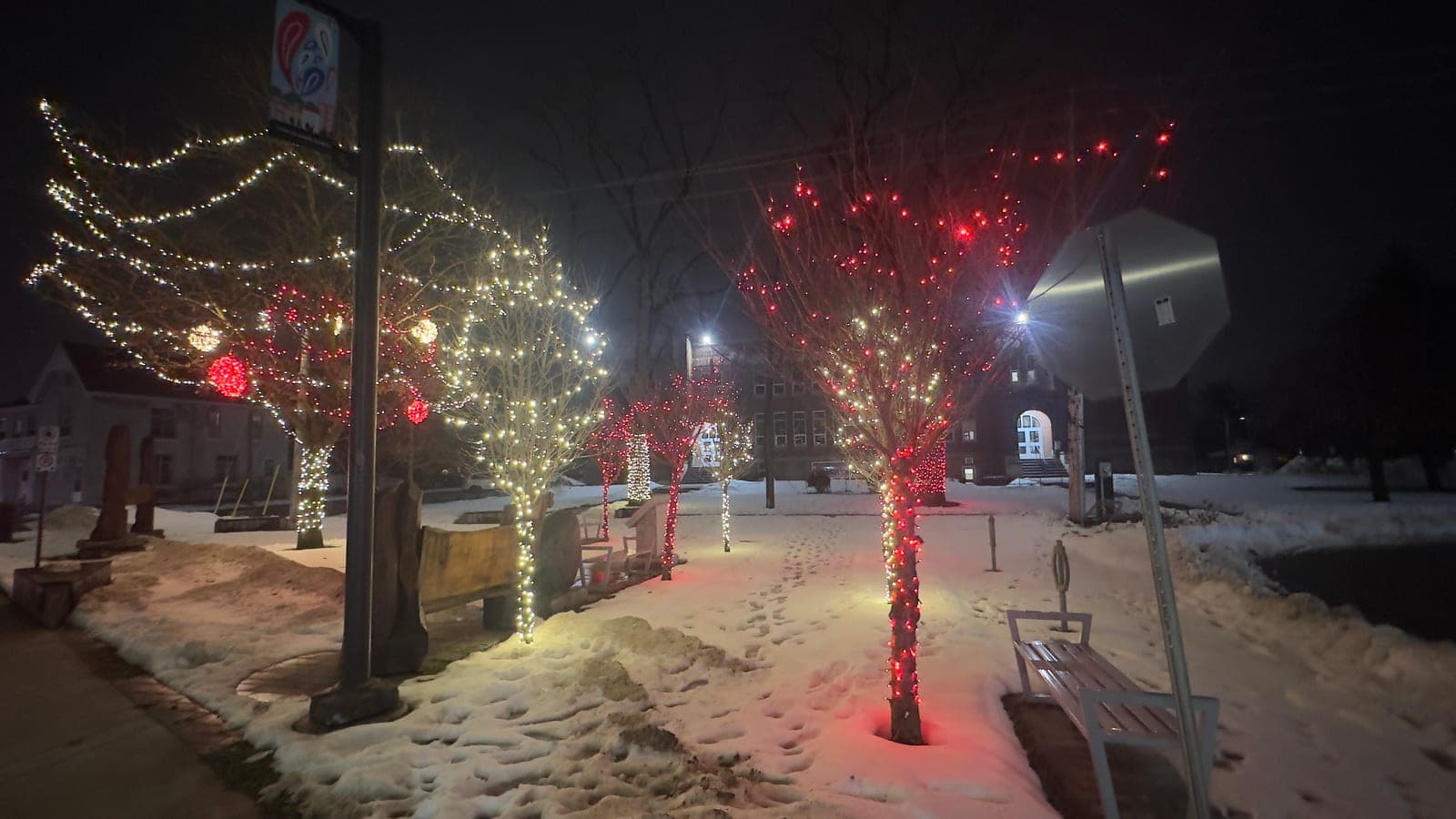
Downtown holiday lighting on a main street or in a BIA does not happen by accident. Here is how municipalities and Business Improvement Areas plan, budget and execute a streetscape program.
Key takeaways
- 1Municipal and BIA lighting programs are multi-stakeholder projects involving councils, boards, public works and often a formal tree lighting event, not a single install visit.
- 2Streetscape lighting has to withstand a full winter of public exposure, salt spray and municipal equipment traffic, which makes commercial-grade materials essential.
- 3A single installer managing design, install, mid-season checks and takedown reduces the coordination burden on a BIA board or municipal staff with limited time.
- 4Multi-year contracts let a town or BIA spread the cost of quality fixtures over several seasons instead of re-buying decorations annually.
- 5Tree lighting ceremonies and streetscape displays both need lead time for permits, road closures or public works coordination well before the event date.
Walk down a decorated main street in December and the lighting looks effortless, matching pole to pole down the block with a tree lighting ceremony that draws a crowd to the square. Behind that result is a program that a municipality or Business Improvement Area has usually been planning since late summer, involving a budget approval, a board or council sign-off, coordination with public works, and an installer who understands that a downtown street is a very different job site than a single home or business.
Who is actually involved
A municipal or BIA holiday lighting program typically has several stakeholders with different concerns. The BIA board or municipal committee owns the budget and the look they want for the district. Public works or facilities staff care about pole access, electrical capacity and anything that touches municipal infrastructure. Local businesses along the street want a display that draws shoppers without blocking storefronts or deliveries. And if there is a tree lighting ceremony planned, event organizers need the lighting finished and tested well before the event date, not the week of. A lighting contractor working on a downtown program has to coordinate with all of these groups, not just show up and hang lights.
Streetscape lighting: poles, trees and crosswalks
The most visible part of a downtown program is usually pole-mounted lighting and, where the street layout allows, overhead lighting strung across the road between poles or buildings. Street trees along the sidewalk get wrapped, and a central square or park often becomes the focal point for a larger tree, sometimes the one used for the town's tree lighting event. Crosswalk areas and public gathering spaces get extra attention since that is where foot traffic concentrates during evening shopping hours.
None of this is close to ground level the way a residential job is. Pole-mounted fixtures and overhead street lighting usually require a boom truck or aerial lift to install and service safely, since municipal light poles and mature street trees are taller than a ladder can safely reach, especially over an active roadway with traffic and pedestrians below. This is exactly the kind of access Festive Holiday Lighting's JLG and Genie equipment is built for, and it is a meaningful reason downtown programs contract out to a specialist crew rather than relying on public works staff for the season.
Consistency across the length of a street matters just as much here as it does on a single commercial facade. Shoppers walk or drive the length of a main street rather than viewing it from one fixed point, so pole spacing, bulb colour and wrap style need to match from one end of the district to the other. A program that mixes older, faded strands on some poles with newer commercial-grade lighting on others reads as unfinished even if each individual pole looks fine on its own, which is one more reason a single contractor managing the whole route tends to produce a more cohesive result than several smaller vendors splitting the work.
Why materials have to be built for the whole winter
A downtown display sits outside from install through takedown after January 6, exposed to whatever the winter throws at it, including road salt spray from passing traffic, wind tunnels between buildings, and the wear of municipal equipment like plows and sanders working the same street. Commercial-grade C9 LED lighting with sealed, weatherproof connections holds up to that environment far better than consumer-grade lighting, and a single outage on a downtown pole is visible to an entire block of shoppers and businesses for as long as it goes unnoticed. Municipal and BIA programs from Festive Holiday Lighting use the same commercial-grade materials as our storefront and plaza work, sized and specified for the exposure a streetscape actually sees. More on our approach to commercial and municipal work is at /services/municipal-bia-lighting.
Tree lighting events need their own timeline
A tree lighting ceremony is often the single most visible event a downtown holds all winter, drawing families, local media and a crowd to the square for the countdown. That event date drives the whole installation schedule backward. The featured tree and its surrounding display need to be fully installed, tested and looking correct well before the ceremony, with time built in to fix anything that does not work on the first try. Rushing a tree lighting install to finish the morning of the event leaves no room for a failed connection or a delayed equipment booking to turn into a public embarrassment in front of a crowd. Our dedicated approach to feature tree installs for events like this is covered at /services/tree-lighting.
Budgeting: annual purchase versus multi-year contract
Many BIAs and small municipalities historically bought decorations outright each year, stored them somewhere in a public works yard, and had staff hang them as time allowed around other seasonal duties. That approach often produces inconsistent results, since installation quality depends on whoever is available that week, and decorations degrade in storage without proper handling. A multi-year lighting contract with a dedicated installer spreads the cost of quality, commercial-grade fixtures over several seasons rather than requiring a large capital purchase every year, and it puts installation, mid-season checks and takedown in the hands of a crew that does this work full time each fall rather than as a side task.
For a board working with a fixed annual budget, this also makes costs more predictable year over year, since the same contractor is maintaining and reusing the same fixtures rather than the program starting from a blank slate every season.
A multi-year arrangement also gives a board room to grow the program deliberately rather than all at once. A BIA might start with the core downtown block in year one, then extend lighting to a secondary street or add a second feature tree in year two, once the budget and the visible results from the first season support the expansion. Planning this way tends to produce a more sustainable program than committing to a large district-wide install in a single season and then struggling to maintain it.
Permits, road access and public works coordination
Working on municipal infrastructure, whether that is a light pole, a street tree in the public right-of-way, or overhead lighting spanning a roadway, usually requires coordination with the municipality's own public works or roads department, even when the BIA is paying for the work. This can mean scheduling around traffic, arranging temporary lane closures for lift equipment, or confirming electrical capacity at existing pole connections before adding load. An installer experienced in municipal work builds this coordination into the project timeline from the start rather than discovering the requirement partway through install week.
Mid-season checks matter more on a public street
A downtown display is scrutinized by an entire community for six to eight weeks. A section that goes dark from a loose connection or a storm is noticed quickly, and on a public street it reflects on the municipality or BIA, not just the installer. A scheduled mid-season maintenance visit, checking connections after any major wind event and confirming everything along the route is still working, keeps the display looking finished through the whole season rather than fading in quality after the first few weeks.
Takedown and storage between seasons
Municipal takedown, like install, generally needs the same lift access used to put the display up, and needs to happen promptly after January 6 so pole and tree crews are not left up past the point the community expects the season to be over. Proper storage of pole fixtures, garland and tree lighting hardware between seasons protects the investment in commercial-grade materials and means next year's install starts from a known inventory rather than a fresh purchase.
Timing takedown also matters for public perception in a way that is different from a private property. A residential display left up too far past the new year is a minor personal choice, while a downtown street still decorated for the holidays in late January reads as neglected to residents and shoppers alike. Building a firm takedown date into the contract, rather than leaving it open-ended, keeps the whole district looking intentional through every part of the season, including the transition back to normal.
Getting a municipal or BIA program started
Festive Holiday Lighting works with municipalities and Business Improvement Areas across Hamilton, Burlington, Oakville, Mississauga, Brampton, Milton, Ancaster, Grimsby, St. Catharines and Niagara Falls on streetscape lighting, tree lighting events and downtown programs of varying scale. Quotes are free and typically begin with a walk of the district to map pole locations, tree placements and any planned event dates. Reach out through /contact or call (289) 426-5764 to start planning next season's program.
Frequently asked questions
How far in advance should a BIA start planning holiday lighting?
Late summer or early fall is typical, especially if a tree lighting ceremony is planned. That gives enough time for budget approval, coordination with public works on pole and tree access, and a full install and test period before the event date.
Does streetscape lighting require special equipment to install?
Yes, in most cases. Municipal light poles, mature street trees and any lighting strung across a roadway are typically too tall or too positioned for ladder access, so a boom truck or aerial lift is used to install and service them safely.
Is it cheaper to buy decorations outright each year or use a contract?
A multi-year contract usually spreads the cost of commercial-grade fixtures over several seasons, which tends to be more predictable and often less costly overall than repeated annual purchases plus storage and staff time to install them.
Who is responsible for permits when lighting is installed on municipal poles?
This varies by municipality, but coordination with the public works or roads department is standard whenever work touches municipal infrastructure or affects road or sidewalk access, even when a BIA is funding the project.
What happens if a section of downtown lighting goes out mid-season?
A scheduled mid-season maintenance visit is meant to catch this before it sits visible for weeks. Reporting an outage to your installer as soon as it is noticed also helps keep the display looking consistent through the full season.
Can a tree lighting ceremony and ongoing streetscape lighting be handled by the same installer?
Yes. Coordinating both together, using the same design language and materials, is generally more consistent and easier to schedule than hiring separate contractors for the feature tree and the surrounding street.
Free quote
Want us to just handle it?
Send a photo of the house and we'll come back with a price within a day.
Keep reading
Commercial · 9 min
Commercial Holiday Lighting for Storefronts, Plazas and Hotels
Commercial holiday lighting has different rules than a house. Here is how storefronts, retail plazas and hotels plan a display that looks sharp, survives the season and keeps everyone safe.
Costs · 8 min
How Much Does Professional Christmas Light Installation Cost in Ontario?
Every quote for professional Christmas light installation is different because every roofline, tree count and product mix is different. Here is what actually moves the price.
Planning · 7 min
When to Book Christmas Light Installation (and Why September Matters)
The best-looking Christmas displays are rarely the result of a last-minute call. Here is how the seasonal booking calendar actually works and why late September is the smart cutoff.